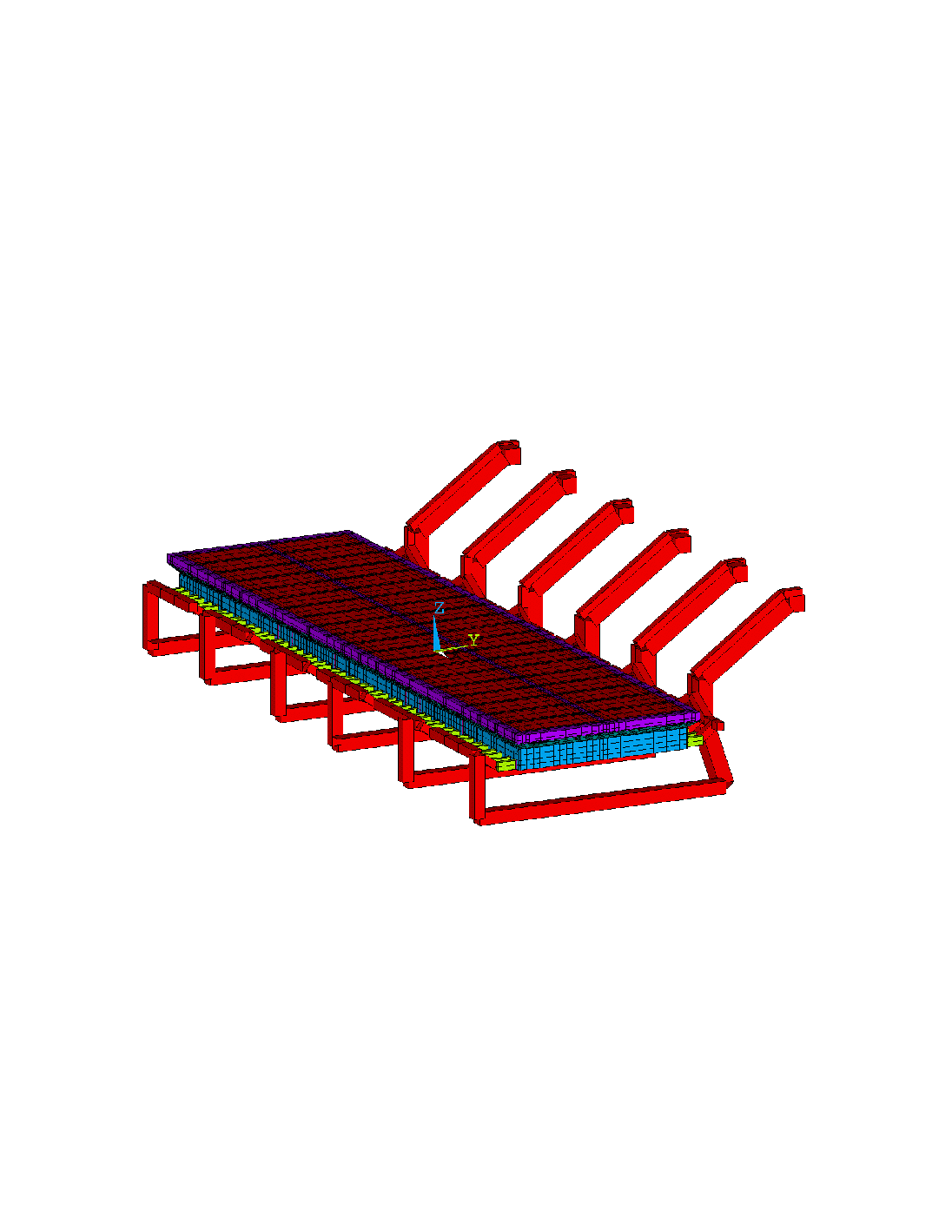
only model was developed (see Figure 3). The second model is part 3D and part 1D
mesh. The 1D mesh T/E busbar model part was presented in [8]. The 3D mesh electric
only inside shell part is more generic than the previous model so it is easier to setup, but
represents the real geometry a bit less accurately.
The simpler model took 7 minutes CPU time to compute the metal pad current
repeating the calculation 4000 times in the context of a cell stability analysis would
required 19.4 days of CPU time, which is a bit too long to be considered practical!
current density field as the two previous models did, but it must also be able to solve the
electric network of the full smelter as the solution of the full smelter electric network is
required for the accurate solution of the magnetic field inside the metal pad.