model
the potshell deflection of the elastic and plastic properties modes
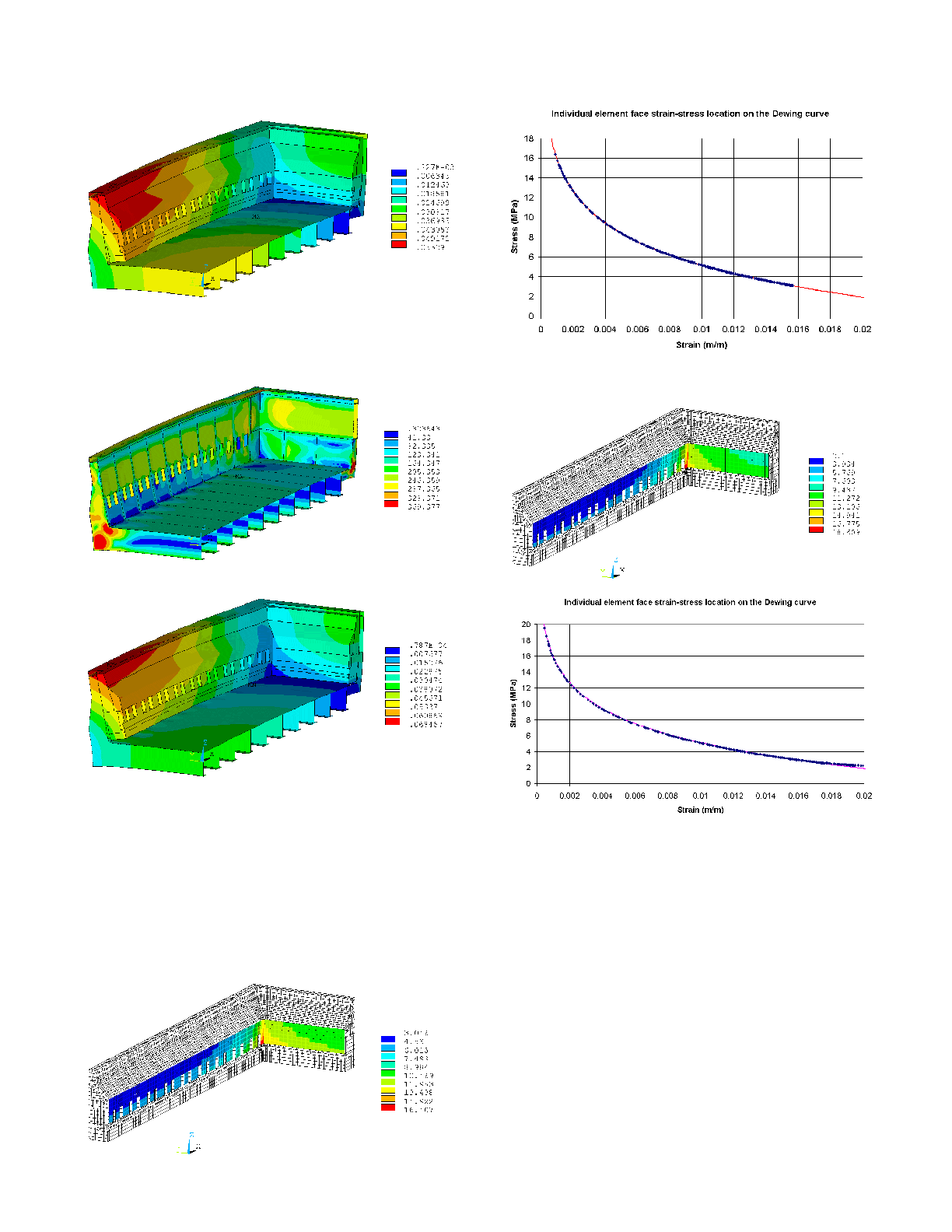
results in the case of the "almost empty shell" model type as
compared to the "empty shell" model type. This result can easily
be explained by the fact that the internal load of the "almost empty
shell" model type has automatically adjusted itself proportionally to
the potshell structure rigidity has it can be seen in Figures 8 and 9.
30 minutes one, but it might be well worth if the accuracy of the
model prediction and hence the model reliability as a design tool is
significantly increased.
developed after the "empty shell" and the "half empty shell"
potshell model types as a compromise between model turn-around
time and model accuracy. At the time, the potshell model type that
was considered as the most accurate, the "half empty shell" potshell
model was taking far too much CPU time to solve even on
expensive supercomputer. Today, despite the success of the
"almost empty shell" potshell model type to offer that compromise,
it is a good time to reevaluate the value of the "half empty shell"
potshell model type as a design tool.